A worthy opponent.
A good duel offers choices to both players. Explain the scoring openly, keep hidden information within the rules and leave the post-game analysis optional.
Brenuloki / the two-seat table
A small table can hold a proper contest, a shared puzzle or a very good conversation. Find the pace that suits both of you.
Original games with ordinary materials. No shop, no ranking, no need for a bigger group.

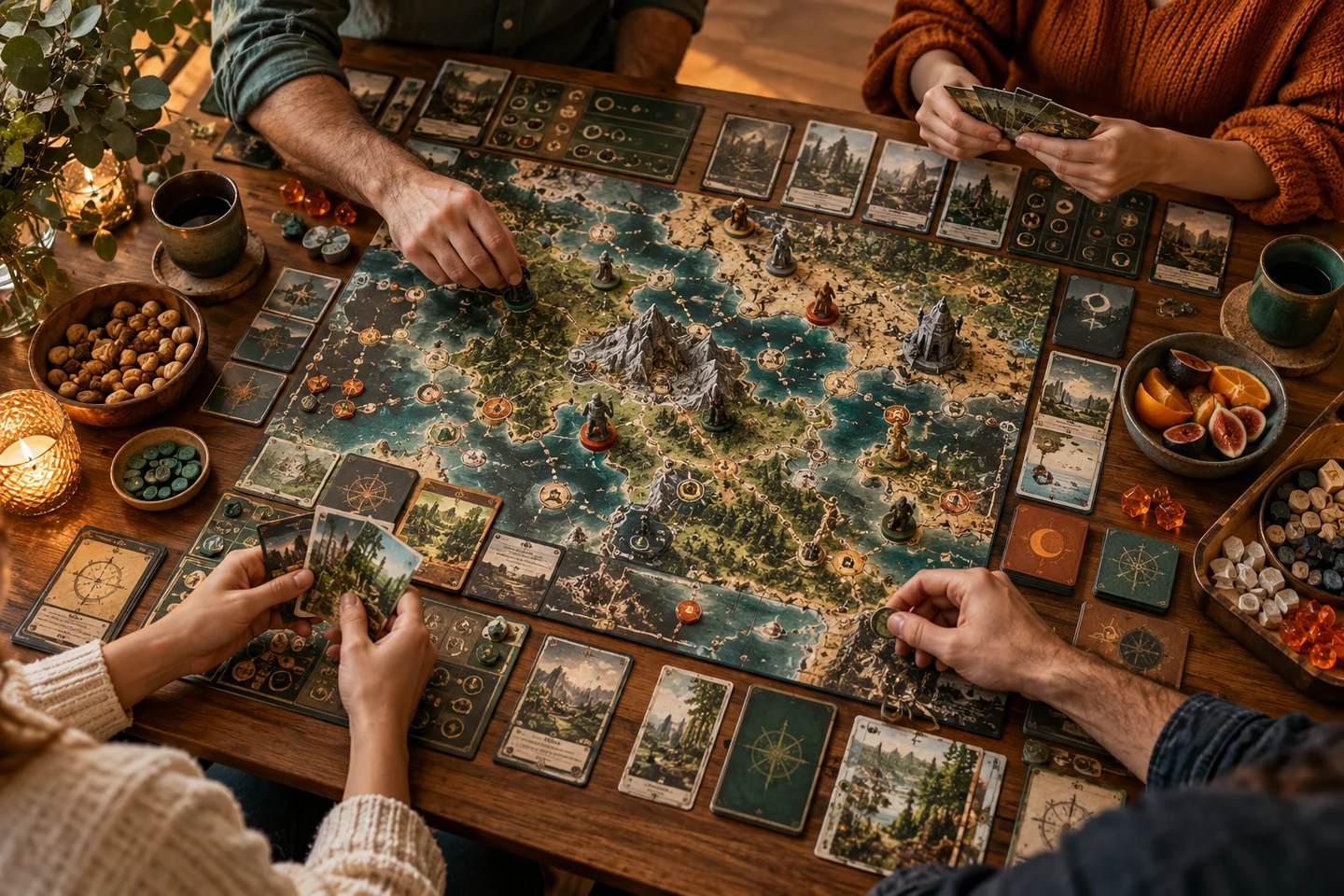
Two is a complete table
A good duel offers choices to both players. Explain the scoring openly, keep hidden information within the rules and leave the post-game analysis optional.
A shared objective works best when each person has room to contribute. Ask about an idea before taking over the decision.
A little choice before the first move
Pebble Ledger fits a brief session because each of its five auctions creates a clear choice. Count the counters together at the start, and reveal each bid at the same time.
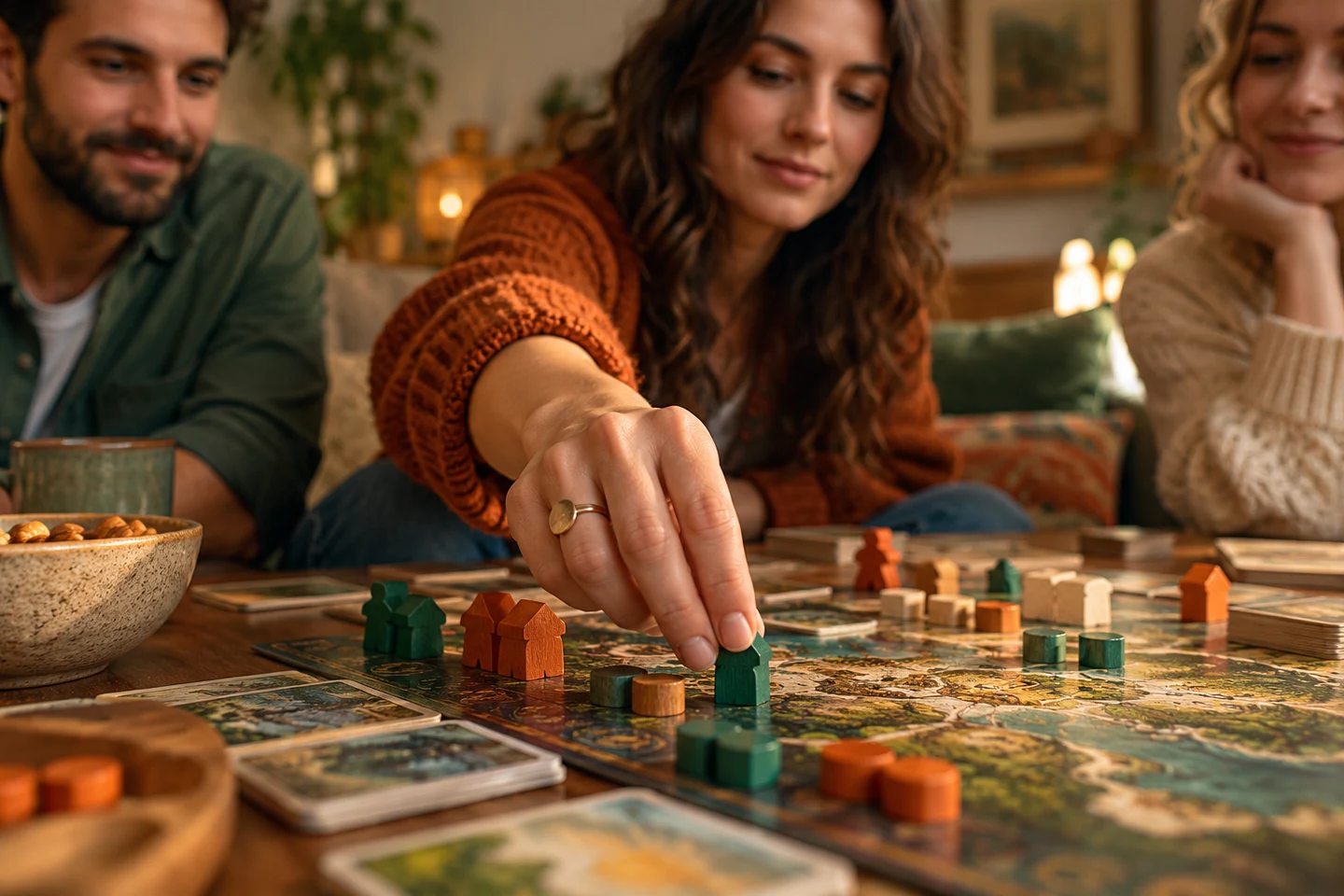
Margin & Meadow gives both players the same simple action, with a larger pattern emerging over time. Keep the grid centred and use contrasting shapes as well as colours if helpful.

Quiet Signals replaces a head-to-head score with a joint record. Take time to compare the drawing and the intended word; the discussion is part of the pleasure.
The two-seat shelf
Claim small fields on a shared grid. The edge is easy to reach, but a connected meadow is worth waiting for.
Explore the meadow rules
Commit a tiny plan, reveal it one step at a time and discover whether your opponent left the space you wanted.
Plan the first four turnsA small budget, five auctions and no second chance to spend the same pebble. Decide which points deserve your attention.
Open the pebble ledgerSend a clue with three simple marks. Your partner chooses the matching word, and both of you learn how the other person sees it.
Try a quiet signalNothing on this shelf matches yet. Remove a search word or return to every game.
An easier beginning

Use an open example to show a turn and the final score. Then restart with equal information.

Comfort is part of the rules

Both players should be able to read the market, route or score without turning the entire board. A separate reference sheet can save a lot of reaching.
Use shape, markings or position alongside colour. If a symbol is hard to read, agree on a clearer replacement before play.
Ask whether a quiet thinking pause is welcome. A timer is an optional house rule, not a default measure of skill.
After the result
If starting order matters, alternate it across a pair of games.
Share a choice that surprised you without prescribing the other player’s strategy.
Try a different board arrangement or a shorter session only by agreement.
A good final round does not need an immediate repeat. Another evening is a valid plan.
From the drawer to the table

Paper grids, numbered cards, counters and a pencil cover the games on this shelf. Keep the quantities visible and replace improvised pieces if they are hard to handle. The full rules state the starting materials and how a game ends.
A quick two-person check
These preparation marks belong to this browser. Use them to set up your own table, then reset them for next time.
Device-only checklist.Keep the conversation kind
If an interpretation changes a decision, stop before revealing hidden information. Read the relevant rule together, agree a temporary interpretation and apply it consistently for the rest of the game. Send a specific note afterwards if the wording could be clearer.
Ask about a ruleBefore the second round
Yes. The starting quantities and turn structures on this shelf are written for two people. A larger-group variation would need its own agreed setup.
No tested age rating is claimed. Read the rules and consider the players’ reading, handling and reasoning needs. The photography depicts adults.
You can agree a house variation, but it may change the incentives. Play the stated rules first if you want to understand the original trade-offs.
No membership or subscription is created. It saves your note so that the question can be reviewed.
A note from your table