The two-seat table
Set a pace that belongs to both players
A good two-seat session balances readable information, time to choose and a comfortable way to stop.
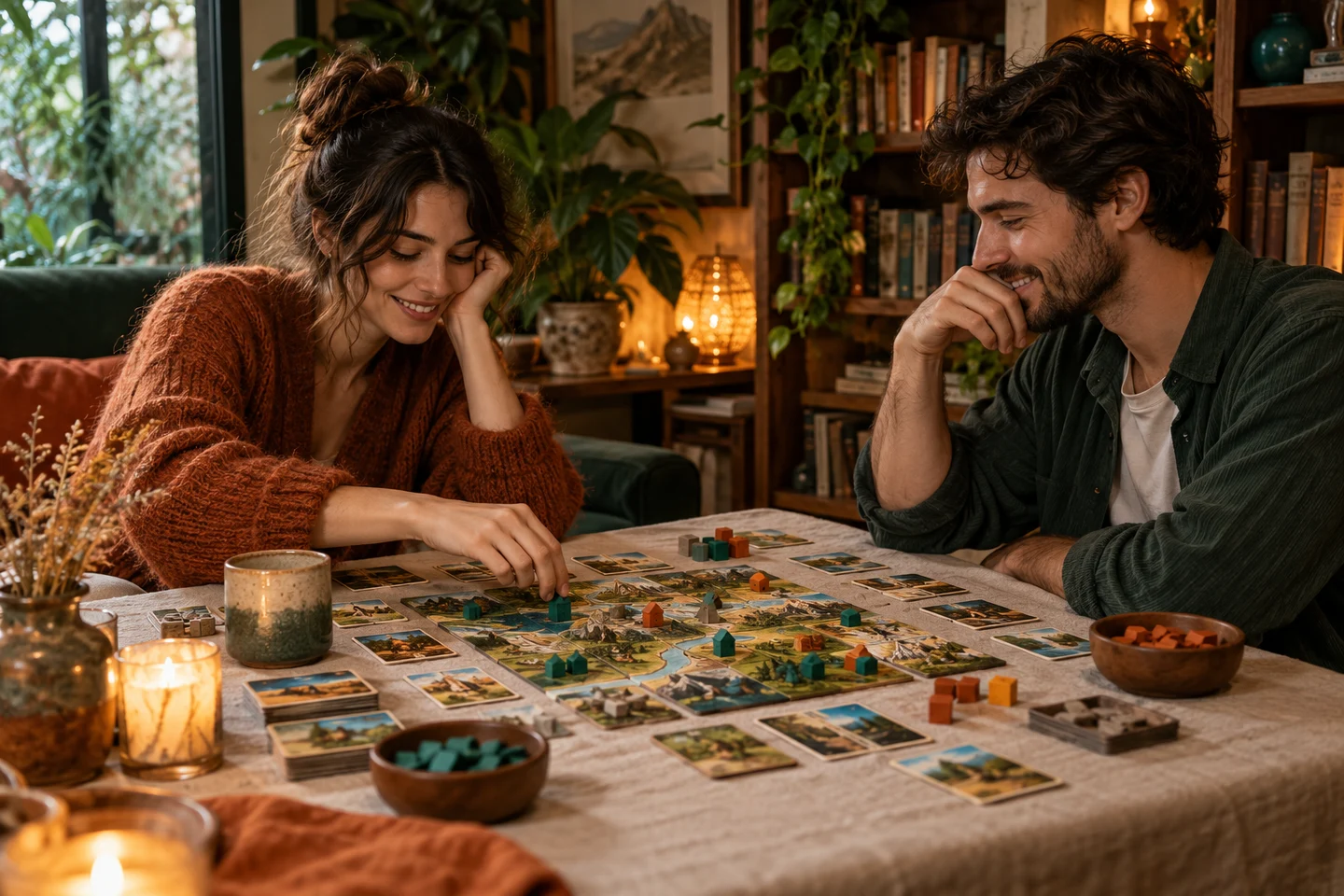
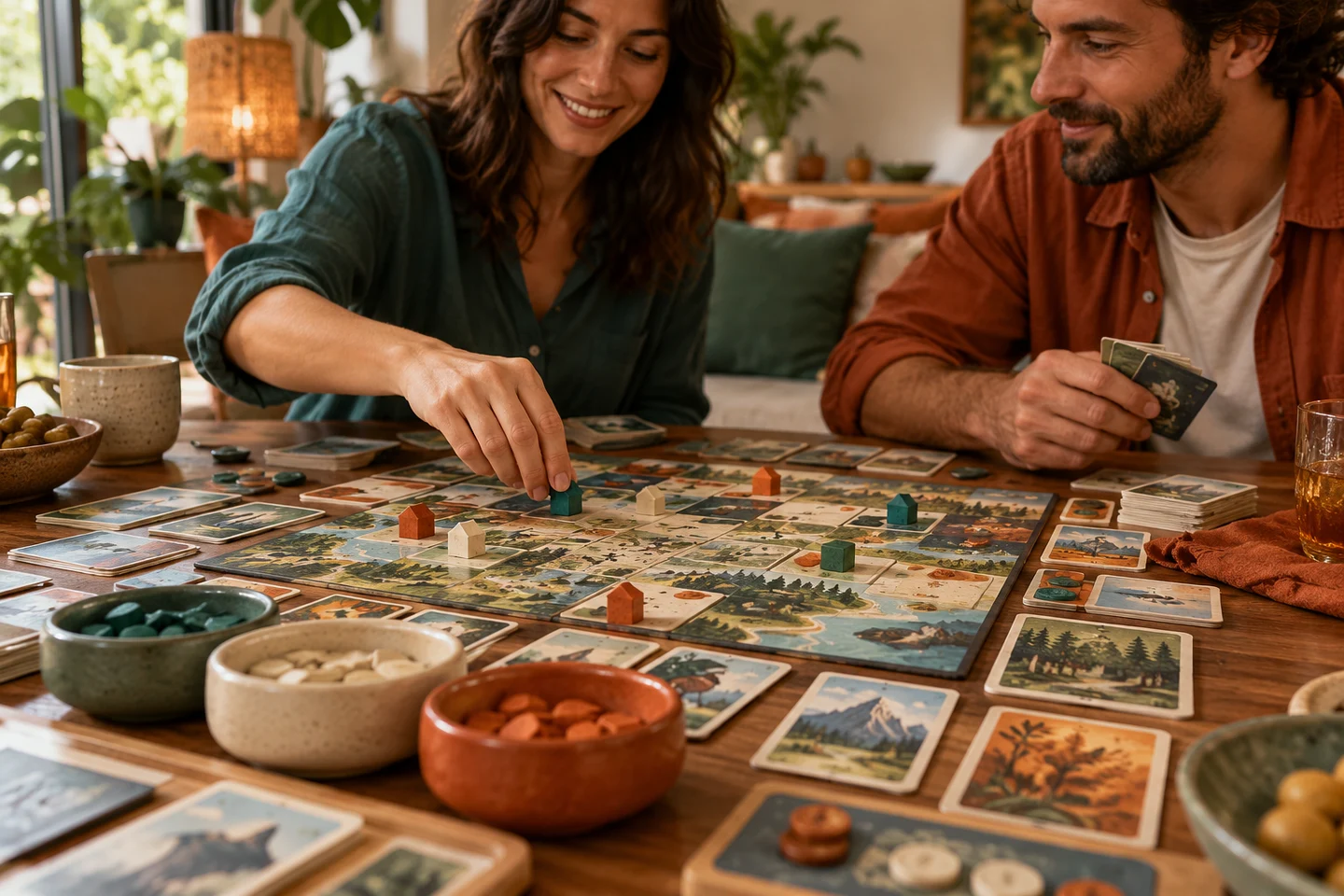
Agree the kind of evening
Ask whether you both want a short rivalry, a longer planning game or a shared objective. The pace selector is a suggestion, not a verdict. Choose the written game that fits the time you actually have.
Teach one ordinary turn
Explain the objective, demonstrate a legal choice and show how the game ends. A practice round can include open discussion and take-backs. State when the practice stops so neither person is surprised by a stricter interpretation later.
Let the result breathe
Some players enjoy analysing every move; others prefer a fresh start. Ask before giving unsolicited strategy advice. Alternate starting order if it matters, and make declining a rematch an ordinary option.
Lay out the public information
Put the board, market and score where both players can see them. Use distinct shapes or marked counters if colour alone is unclear. Count starting resources together before hiding any information.
Handle a disagreement before the reveal
Pause a turn if a rule affects hidden information. Read the same wording, agree a consistent interpretation for this game and make a note for later clarification. Avoid changing the interpretation after seeing who benefits.